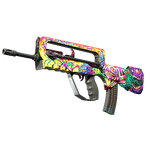
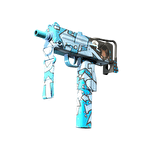
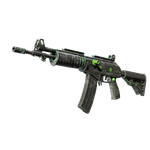
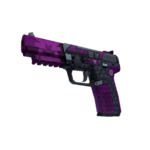
Workshop pattern scale: choose a motif size for two different weapon shapes
Compare a small, medium and large reading of the same original motif on two hypothetical weapon shapes. The useful question is what remains recognisable and how the repeated elements relate to the available surface. A scale choice that works on a broad body should not automatically become the rule for a narrower one. Valve documents per-weapon pattern-scale adjustment.
CASECS2Updated:
Build a two-model comparison sheet
Hypothetical surface
Versions
Question
Broad body
Small, medium, large motif
Which size preserves the main shape?
Narrow body
Same three visual alternatives
Which becomes fragmented or crowded?
Selected pair
One choice for each model
Do they still share a design language?
Draw an original leaf-like mark with a clearly recognisable opening. Label the alternatives by their visible result, not by an assumed numerical setting. Keep one reference image of the original mark beside the comparison.
A check diagram, not a game screen.
Define what recognition means
Write which part must remain visible: the opening and overall leaf silhouette, for example. Without that criterion, a large dramatic fragment and several tiny complete marks may be judged for unrelated reasons. Decide whether either interpretation fits your intended theme.
This exercise concerns motif size, not whether a repeating source image joins cleanly. If that separate issue appears, use the seamless-pattern check and return to the size comparison after identifying the source problem.
Review the broad surface first
Inspect small, medium and large alternatives at the same viewing size. Describe how many recognisable visual elements you perceive without turning that observation into a universal target count. A small version may become texture, while a large version may become an abstract fragment.
Neither outcome is automatically wrong. Select the one that serves your stated intention and record its drawback. For instance, the medium version may preserve the opening but still produce a distracting concentration near one edge.
Repeat the question on the narrow surface
Do not copy the broad-body conclusion before looking. Examine whether the same motif reading survives on the narrower shape. If only fragments remain, decide whether that abstraction still belongs to your design or whether a different visible size works better.
The UV and triplanar guide can help separate application questions from this visual decision. Avoid assuming a universal parameter direction or a shared numeric value: record the result you actually intend to compare.
Compare the selected pair as a family
Place the chosen views together under matched lighting. Ask whether both still communicate the original leaf idea, even if their visible sizes differ. Consistency can come from the same motif language rather than identical repetition.
Check the player-view composition for each. A design that reads well in a side-by-side presentation may become a different visual texture at normal viewing size. Save that observation before deciding whether another revision is necessary.
Save a model-specific decision
Write one choice and one remaining issue for each surface. Keep the original artwork, the three alternatives and the selected pair together. This makes later revisions traceable without pretending that a single global setting solved every weapon.
The submission and selection explanation covers the next stage. A Workshop preview does not modify inventory or establish a real item’s properties. The outcome here is a model-specific size decision and a clear reason for it, not a price or rarity claim.
Sources checked on 2 November 2026. Labels and locations can vary by client version and language. Match the described state in your own current interface.
Help
Questions and answers
What you should know before you begin.
Should the same motif always have the same visible size?
Not necessarily. Check recognition and composition on each shape before deciding what consistency should mean.
Is the largest version always the clearest?
No. It may turn the motif into a fragment. Compare that outcome with your recognition target.
Can this exercise give one numeric setting for every weapon?
No. Keep the decision tied to the visible result on each model rather than assuming a universal value.