Original-art asset log: record what belongs in your Workshop design
Create the asset log while drawing, not after every component has merged into a final image. Valve says submission elements must be original work, even when other artwork is freely available. For your own geometric garden design, record the leaf, lettering and texture separately so you can explain what each element is and return to its working source when revising.
CASECS2Updated:
Start with a small component register
Original component
Working record
Open question
Geometric leaf
Your shape sketch and revision name
Which contour is current?
Short lettering
Your lettering study
Are all letters from the intended version?
Surface texture
Your own drawing layers
Does an old experiment remain?
Use descriptive names rather than unexplained file numbers. This is a hypothetical worksheet for your own artwork, not a declaration about a real submission or a legal certificate.
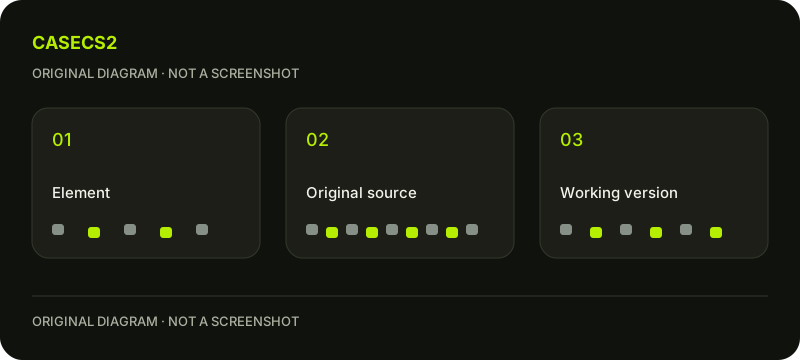
A check diagram, not a game screen.
Describe the element before its location
Write what the component contributes: a repeated leaf, a title mark or a quiet texture. Then record where you keep the editable working source. A flattened image alone may not reveal which version of a shape or lettering study was used.
Keep the log short enough to update. One clear line per meaningful component is more useful than a long list that nobody can connect to the finished drawing. When two components share a source, make that relationship explicit rather than copying an ambiguous note.
Separate references from included artwork
Maintain a different place for things you studied and things actually present in the design. A mood reference can explain an idea without becoming an asset in the final image. If you cannot tell whether something was copied into the working document, leave that question open until you inspect it.
The submission and selection guide supplies broader context. Do not treat a credit line as proof that an included element satisfies an originality requirement. Record the actual decision you still need to resolve.
Follow a component through a revision
Suppose the leaf changes from a narrow outline to a broader form. Update the current component reference while keeping the earlier sketch identifiable. If the contact images still show the old leaf, note that mismatch before preparing the presentation.
The in-hand composition review can reveal why that shape was revised. Link the design reason to the component record in your notes: broader opening, clearer player view. This makes the log useful for creative work as well as preparation.
Review the assembled image for forgotten elements
Walk through the final drawing by region and match visible components to the log. Look for an old texture experiment, spare lettering or a decorative mark that survived from a draft. Ask whether each still belongs to the intended original design.
Use the salience review to identify what is actually noticeable, but do not ignore a component merely because it is small. The albedo explanation can help distinguish drawn colour information from an observed lighting impression during that inspection.
Keep a usable unresolved list
Finish with the current component references and a short list of questions that remain. Replace a doubtful element with your own new study if you cannot confidently account for it; keep the reason beside the record. This is practical preparation, not a substitute for professional legal advice when needed.
The screenshot guide concerns documenting the resulting work. A preview does not create inventory ownership or make the log an official approval. Its value is that the design’s elements and revisions remain understandable before you decide to present them.