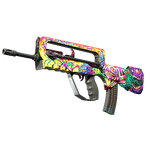
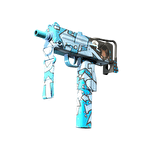
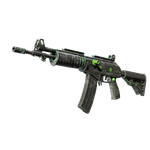
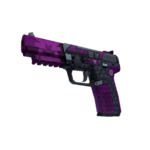
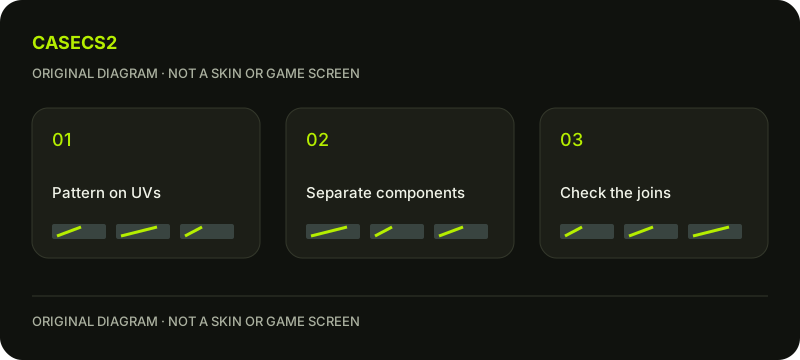
Review a Hydrographic pattern across separate weapon components
Treat separate weapon components as deliberate parts of the composition rather than assuming a flat motif will remain continuous everywhere. Valve describes Hydrographic as applying patterns through existing UVs. An original component review asks where the pattern’s rhythm should continue, where a break can be intentional and which area needs a simpler motif.
CASECS2Updated:
Give the components separate questions
Imagined component
Review aim
Avoid assuming
Large body area
Main rhythm is recognizable
Every neighboring part must align
Narrow supporting part
Detail remains legible
The same density suits every area
Join between parts
Break looks intentional
Flat-image continuity guarantees a model join
Imagine an original pattern of broad waves and small dots. The waves may read well on a large area while the dots clutter a narrow one. Record both observations before changing the entire source image. One successful component does not certify every other part.
A check diagram, not a game screen.
Define what continuity means for this design
Write whether your idea needs a recognizable direction, an exact line continuation or simply a related rhythm across parts. Those are different goals. A design can feel coherent without a single mark crossing every physical boundary uninterrupted.
The mapping guide explains the application context, while this exercise focuses on the author’s decision. Do not force every component into an imagined flat sheet just because a side image made the motif look continuous. Choose the intended relationship first, then inspect what the actual preview shows.
Inspect one part at a time
Use the selected model and supported preview to identify the main body and a smaller supporting component. Keep style, light, wear and placement conditions recorded. Describe the visible shape on each area before making a revision.
If one region appears too busy, simplify an element or spacing choice in your own artwork and compare it under the same conditions. Avoid changing the model as well as the pattern during that step. You want to learn whether the specific revision helps that component, not whether a different weapon happens to show the idea more favorably.
Separate source-repeat problems from component joins
If a repeating edge is visible, inspect whether it belongs to the source pattern or to the model’s component relationship. The seamless-pattern guide offers a separate flat-image check. A clean tile does not automatically settle the three-dimensional join.
Likewise, the lighting guide helps distinguish a bright boundary from a motif discontinuity. Keep those causes separate. Repainting a source edge cannot be judged meaningfully if the comparison also changes the scene and the material response that made the edge appear conspicuous.
Check the assembled result from the player view
After the component checks, return to a normal in-hand view. Ask whether the pattern feels related across visible parts and whether the main idea survives the assembled shape. The composition guide helps organize that perspective.
A deliberate quiet component can support a more detailed body. Do not make every region equally busy merely to demonstrate coverage. Retain the component notes alongside the overall image so that a pleasant whole does not hide an unresolved local issue, and a small discontinuity does not automatically erase a successful broader relationship.
Keep the conclusion tied to the design choice
Record which parts should relate, which break is intentional and which component still needs revision. Use plain visual observations rather than assigning a market category from the finish style. A private preview is not evidence that a named item exists or is available.
The submission review guide separates these design checks from official integration. A completed exercise establishes a clearer component rhythm, not a guaranteed continuous motif everywhere, a float range or an accepted tradable skin. Save the unresolved questions so the next revision can address one real issue at a time.
Sources checked on 2 November 2026. Labels and locations can vary by client version and language. Match the described state in your own current interface.
Help
Questions and answers
What you should know before you begin.
Must every line continue across every part?
Not necessarily. Define the intended relationship and inspect the actual component result.
Does a seamless tile prove every join works?
No. Source repetition and component mapping need separate checks.
Can style alone determine rarity or market availability?
No. An authoring style does not establish those item claims.