
Define the specific decision
Choose one accent and keep the other entries restrained so every picture does not need to match exactly.
For candidates relevant to “Build a small set around one colour accent”, use the skin finder. Keep this task separate from your broader inventory plan.
Read the worked example
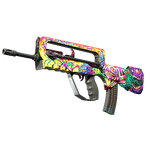
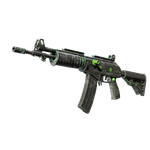
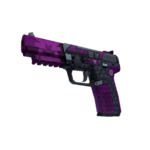
In a mock-up, a green rifle becomes the accent while a grey pistol and dark SMG support the base; a second bright candidate is deferred.
An accent is defined by relative attention, not simply by an image's brightness. A green rifle can lead beside grey and dark entries even without an intense pattern. Review a reduced-size board first: the main colour should read without studying tiny details. Then inspect the individual images to ensure you like the supporting choices in their own right. Do not select something you find dull solely to serve as a background. Save the second bright candidate for a different board rather than adding it automatically to the first. Label the roles accent and support; this explains inclusion more clearly than promising that every entry will have an identical palette.
| Entry | Interpretation |
|---|---|
| Main accent | the green rifle |
| Support | grey pistol and dark SMG |
| Deferred idea | a second bright item |
Use this task checklist
- Assign one accent item.
- Define restrained foundation colours.
- Review the set on one image board.
Recognise the failure condition
Making every entry equally bright and losing the main visual reference.
The set has one readable accent and a consistent neutral foundation.
Apply the additional check
A monochrome board can provide an additional accent test: colour disappears but light-and-dark relationships remain. This is a visual check, not a mandatory beauty assessment. A supporting pistol that dominates in brightness may compete with the rifle even with a neutral hue. Restore colour and compare both observations. Describe support specifically through a smaller colour area, restrained contrast or dark foundation. That explanation survives a shade change better than requiring every entry to be green.