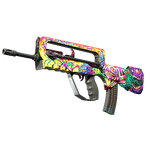
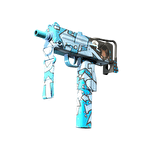
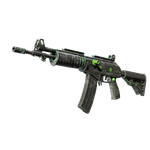
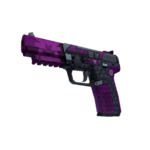
Identify the two copies first
Start with the weapon model and finish, then connect each observation to an individual inspection or item record. Label your candidates A and B so a screenshot cannot quietly switch places with a different example. Record an item identifier only if the source actually provides one. If you have a catalog image and a name, describe them as reference information. You have not yet established the attributes of a specific item that someone owns or offers.
What each field contributes
Float value is a numerical wear attribute; the wear category is a broader label. Paint seed is a separate pattern-related field, not another way to write the float. Valve’s Weapon Finishes Guide explains finish-specific wear ranges and variation in pattern application. The useful habit is to keep separate columns for separate facts. Leave an absent field unknown. Do not calculate a paint seed from a float or fill a missing float with a category’s midpoint.
Example one: same wear label, different numbers
Suppose two verified copies share a wear label, while their supplied float values are 0.18 and 0.28. The difference is 0.10. You can order those numbers, but that does not decide which copy you prefer or where its most noticeable mark appears. Inspect matching areas of both items. If B has no supplied float, replace the second number with “unknown”; the shared label cannot recover it. These example numbers are not current listings or a claim about every finish’s limits. Keep the supplied precision when recording a value. For example, hypothetical values 0.180001 and 0.180099 both become 0.18 when rounded to two decimal places. A shortened display would hide their difference. Use the original values for any calculation, then round only the explanation if needed. Extra decimal places do not establish an appearance advantage or a price premium.
Example two: same float, a different pattern question
Now imagine two records both display 0.18, but one supplies paint seed 123 and the other 456. Those seed numbers are hypothetical identifiers for this example, not recommendations for a particular finish. Equal float values do not establish equal seeds. Different seeds also do not guarantee a meaningful visible difference for every finish. Open matching inspections and describe the detail you can actually see. If seed information is missing, keep the pattern conclusion provisional rather than calling the two copies identical.
Use a range calculation for a range question
For a hypothetical finish range from 0.10 to 0.50, a value of 0.18 sits 20% of the way through that interval: (0.18 − 0.10) / (0.50 − 0.10). These invented limits teach the arithmetic. Verify a real finish’s limits separately and read the scale used by your source. The percentage is not a drop chance, a discount or a price premium. Keep the original precision of the supplied float even if you round a display for readability.
Check appearance under comparable conditions
Use the same side, a similar zoom and reasonably consistent lighting. First compare the area that matters to your choice, then inspect another angle. A bright crop can hide a mark, while a shadow can resemble one. Keep the images tied to A and B throughout the process. If an inspection stops working, preserve your notes and mark that copy unverified. Do not replace it with another item sharing the finish name and treat the evidence as unchanged.
A compact inspection note can separate the evidence:
| Field | Copy A | Copy B |
|---|---|---|
| Full name | Copy the supplied name | Copy the supplied name |
| Float | Supplied value, or unknown | Supplied value, or unknown |
| Paint seed | Supplied seed, or unknown | Supplied seed, or unknown |
| Inspection | Link and viewing conditions | Matching view, or not checked |
Fill the note from the actual records. If only one inspection is available, the next action is to inspect the other copy rather than force a winner.
Next step: calculate, then inspect
Open the Float & Wear Explorer, whose form is currently in Russian, and check its labels before entering verified values. It explains numbers; it does not retrieve your individual Steam item or determine its market price. Continue to item identity if the names may refer to different versions. A useful final note contains the source, float, wear label, seed when known, and one visible reason for your preference. Unknown fields remain open checks, not hidden assumptions. Use comparison for the supported name shortlist; its 25-name snapshot does not supply the individual inspection evidence in this exercise.
Sources
Next step
Open Float & Wear Explorer (Russian form)
How to use CaseCS2: free tools, Steam sign-in and your records · Identify a CS2 item: model, finish, StatTrak, Souvenir and stickers