

Define the specific decision
Start with items you intend to keep and use them as constraints for further selection.
For candidates relevant to “Build new skin choices around an existing inventory”, use the skin finder. Keep this task separate from your broader inventory plan.
Read the worked example
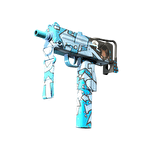
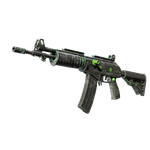
The owner already has a blue rifle and a neutral pistol; new options are tested for compatibility with that particular pair.
An anchor differs from an ordinary retained entry because its characteristics establish rules for the candidates around it. For the blue rifle, note saturation, the size of the colour area and pattern contrast rather than simply writing blue. A neutral pistol may connect it to a dark third item even when shades differ. Before searching, separate mandatory characteristics from flexible ones. Requiring identical colours can make the list artificially narrow. First test one addition against two anchors and only then consider another. If a candidate requires replacing an anchor, you have a different plan: explicitly record the changed starting constraints and review the entire example.
| Entry | Interpretation |
|---|---|
| Blue rifle | the main colour reference |
| Neutral pistol | a restrained connecting entry |
| New candidate | tested beside both anchors |
Use this task checklist
- Select three retained anchor items.
- Note their main colours and contrast.
- Choose additions using those observations.
Recognise the failure condition
Starting from a blank sheet and forgetting the items you already enjoy.
New candidates are linked to the retained anchors by an explicit visual rule.
Apply the additional check
Give each anchor an allowed range of flexibility. A blue rifle may require restrained neighbours rather than an exact blue match. A neutral pistol may permit a second colour provided it does not overpower the first. These notes keep selection flexible without losing direction. Test additions against every anchor rather than just the favourite. When a candidate fits one and conflicts with another, record the conflict explicitly. Replacing an anchor cannot be hidden inside a compatible-candidate label; it changes the plan's starting point.